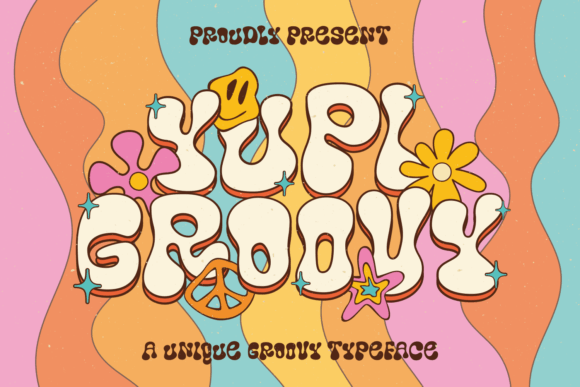
Unleashing Retro Energy: A Comprehensive Guide to the Yupi Groovy Typeface
In the ever-evolving landscape of graphic design, typography serves as the voice of visual communication. While minimalism and sans-serif cleanliness have dominated the digital age for over a decade, there is a palpable shift occurring. Designers, marketers, and creators are increasingly seeking typefaces that inject personality, warmth, and a distinct sense of movement into their projects. Enter Yupi Groovy, a font that pulsates with energy and stands as a delightful blend of retro charm and contemporary style. This typeface is not merely a collection of letters; it is a design statement that captures the fluidity of motion and the exuberance of the funk era, reimagined for modern applications.
The strokes of Yupi Groovy are fluid and dynamic, appearing as if they were captured in the midst of a groovy dance move. Unlike static fonts that sit rigidly on the baseline, this typeface invites the eye to travel along curves that twist and turn with a playful rhythm. The exaggerated forms create a visual bounce that commands attention without sacrificing legibility. For professionals looking to break away from the corporate sterile aesthetic, understanding the nuances of such a display font is essential for crafting memorable brand identities and engaging visual content.
The Anatomy of Movement and Character
To truly appreciate the utility of Yupi Groovy, one must examine its structural characteristics. The font is defined by its high contrast between thick and thin strokes, a hallmark of 1970s typography, yet it avoids the fragility often associated with high-contrast scripts. Instead, the terminals are rounded and soft, giving the text a approachable and friendly demeanor. The "groove" in the name is literal; the baseline is not always straight, and certain characters lean or sway, creating a collective rhythm when words are formed.
This dynamic quality makes it an exceptional choice for headlines and short bursts of text where impact is paramount. The exaggerated forms do not hinder readability; rather, they enhance recognition by creating unique silhouettes for each letter. When set in all caps, Yupi Groovy exudes confidence and boldness, perfect for poster headers. In sentence case, the interplay between ascenders and descenders creates a lively texture that feels organic and hand-crafted. This balance between structured design and free-flowing expression is what sets it apart from generic retro revivals.
Technical Versatility and PUA Encoding
Beyond its aesthetic appeal, Yupi Groovy offers significant technical advantages for designers who require flexibility. A standout feature is its PUA (Private Use Area) encoding. In the world of typography, PUA encoding is a critical functionality that allows users to access special glyphs, ligatures, and alternate characters directly through the character map or specific keyboard shortcuts, without needing complex OpenType feature panels.
For the hobbyist or the professional working across different software environments, this means seamless access to the font's full potential. You can easily insert swashes, decorative alternates, or unique symbol combinations that add further flair to the design. This level of accessibility ensures that the "infectious sense of fun" inherent in the font is not locked behind technical barriers. Whether you are using industry-standard vector tools or more accessible word processors, the amazing glyphs remain within reach, allowing for rapid iteration and creative experimentation.
Strategic Applications in Modern Design
The versatility of Yupi Groovy lends itself well to a wide array of projects that demand attention. Its primary strength lies in its ability to evoke emotion instantly. When a viewer encounters this font, the immediate association is one of joy, nostalgia, and creativity. This makes it the perfect choice for projects that require a touch of funk and personality.
Music and Entertainment Branding
Naturally, the font finds a home in the music industry. It is ideally suited for album covers, particularly for genres ranging from neo-soul and funk to indie pop and electronic dance music. The rhythmic nature of the lettering mirrors the beat of the music, creating a cohesive visual-audio experience. Beyond albums, it excels in concert posters and festival branding, where the goal is to communicate energy and excitement before a single note is played. The fluid strokes suggest movement, implying that the event associated with the text will be equally dynamic.
Advertising and Retail Campaigns
In the realm of advertising, standing out in a crowded marketplace is the ultimate challenge. Yupi Groovy serves as a powerful tool for advertisements that aim to disrupt the scroll. Whether used in social media graphics, billboards, or print flyers, the font's exaggerated forms stop the eye. Retail brands selling lifestyle products, vintage clothing, or artisanal goods can leverage this typeface to convey a brand story that is human-centric and fun. It signals to the consumer that the brand does not take itself too seriously and values creativity and individuality.
Packaging and Product Identity
Product packaging is another frontier where Yupi Groovy shines. In sectors like craft beverages, gourmet snacks, or beauty products, the label is the primary salesperson. A font that exudes an infectious sense of fun can differentiate a product on a shelf lined with competitors using safe, traditional typography. The retro charm appeals to consumers seeking authenticity and nostalgia, while the contemporary styling ensures the product feels current and relevant. The curves and twists of the font can wrap around circular labels or follow the contours of a package, enhancing the three-dimensional presence of the product.
Integrating Retro Trends with Contemporary Workflows
The resurgence of 1970s aesthetics is not just a fleeting trend; it is a response to the digital fatigue many consumers feel. People are craving tangible, human elements in design. Yupi Groovy fits perfectly into this cultural moment, but integrating it requires a thoughtful approach to ensure it does not feel dated or cliché.
Successful implementation involves pairing Yupi Groovy with complementary typefaces. Because it is a display font with strong personality, it should generally be paired with a neutral, clean sans-serif or a simple serif for body copy. This contrast allows the groovy elements to sing without overwhelming the reader. For educators creating engaging learning materials, using Yupi Groovy for section headers can make dry content feel more inviting and less intimidating. Researchers presenting data in a more public-facing format can use it to highlight key findings, making the information feel more accessible.
Furthermore, color plays a pivotal role in maximizing the impact of this font. The fluid strokes of Yupi Groovy interact beautifully with gradients, duotones, and vibrant color palettes typical of the psychedelic era. However, it also holds its own in monochrome applications, where the shape and flow of the letters become the sole focus. Designers should experiment with layering the font over textures or incorporating it into illustrations to create depth. The font's PUA encoded glyphs allow for the creation of custom logos where letters connect in unique ways, forming a singular graphical element rather than just text.
Considerations for Professional Use
While Yupi Groovy is a powerful tool, it is important to recognize its limitations to maintain professional standards. It is not designed for long-form body text. The exaggerated forms and varying baseline can reduce readability in dense paragraphs. Its domain is the headline, the logo, the call-to-action, and the short caption. Business owners and creators should reserve its use for moments that require emphasis and emotional connection.
Additionally, context matters. While the font exudes fun, it may not be appropriate for industries requiring strict solemnity or extreme conservatism, such as legal services or emergency medical communications. However, even in these fields, there are opportunities for softer internal communications or community outreach programs where a friendlier tone is beneficial. The key is intentionality. Using Yupi Groovy should be a deliberate choice to inject specific energy into a project, not a default setting.
The Future of Expressive Typography
As we move forward, the line between digital and analog continues to blur. Fonts like Yupi Groovy represent a bridge between the precision of digital vector design and the imperfection of hand-lettering. They remind us that technology can be used to create warmth and humanity. For creators and researchers studying design trends, the popularity of such typefaces indicates a broader desire for expression and individuality in a standardized world.
The ease of access provided by features like PUA encoding democratizes high-quality typography. It allows a small business owner to create a professional-looking poster with the same typographic richness as a major agency. It enables educators to make classroom materials that spark joy in students. It empowers hobbyists to turn their passion projects into visually stunning realities. The fluid dynamics of the strokes encourage designers to think less about rigid grids and more about flow and composition.
Ultimately, Yupi Groovy is more than just a font file; it is a catalyst for creativity. Its ability to blend retro charm with contemporary style ensures its relevance across various mediums. From the vinyl sleeve of a new jazz record to the digital banner of a tech startup looking to show its human side, the applications are limitless. By embracing the curves, the rhythm, and the playful spirit of this typeface, designers can craft messages that do more than inform—they resonate, they dance, and they leave a lasting impression on the audience. The infectious sense of fun embedded in every glyph is an invitation to loosen up, experiment, and let the design groove.